 Langley
French innovators in London
‘Patterns in Musical Mobility: French Innovators in London, c. 1790-1914’, presented at the VII. Internationales Joseph-Woelfl-Symposium 2025, Woelfl-Haus Bonn, Germany, 2-4 May 2025. Published in Joseph-Woelfl-Almanach 2026 (Bonn: Apollon Musikoffizin, 2026), forthcoming
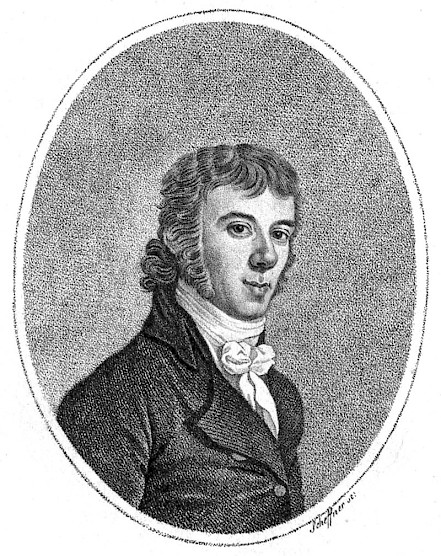
After an opening ceremony in the beautiful Altes Rathaus on Bonn’s market square, the seventh International Joseph Woelfl Symposium took place at Woelfl-Haus Bonn over three days in early May 2025. Nineteen presentations were given by participants from eight countries. Kaffeepausen, chamber music and walks in the garden of Prof. Margit Haider-Dechant and Prof. Hermann Dechant, founders of the Woelfl-Haus study centre, made the setting idyllic. I was delighted to be able to attend in person.
This year’s symposium centred on France and French cultural history in recognition of Woelfl’s residence in Paris, September 1801 to April 1805. My contribution focused on geographical mobility itself, noting how readily Woelfl was able to travel towards new musical opportunities while avoiding political limitations. Taking his trajectory as emblematic – from Salzburg and Vienna to Warsaw, Prague, Dresden, Hamburg, Berlin, Leipzig, Breslau and other cities, eventually Paris, then London – I used his last move as a prompt to ask questions about other artists moving from France to England in the same period.
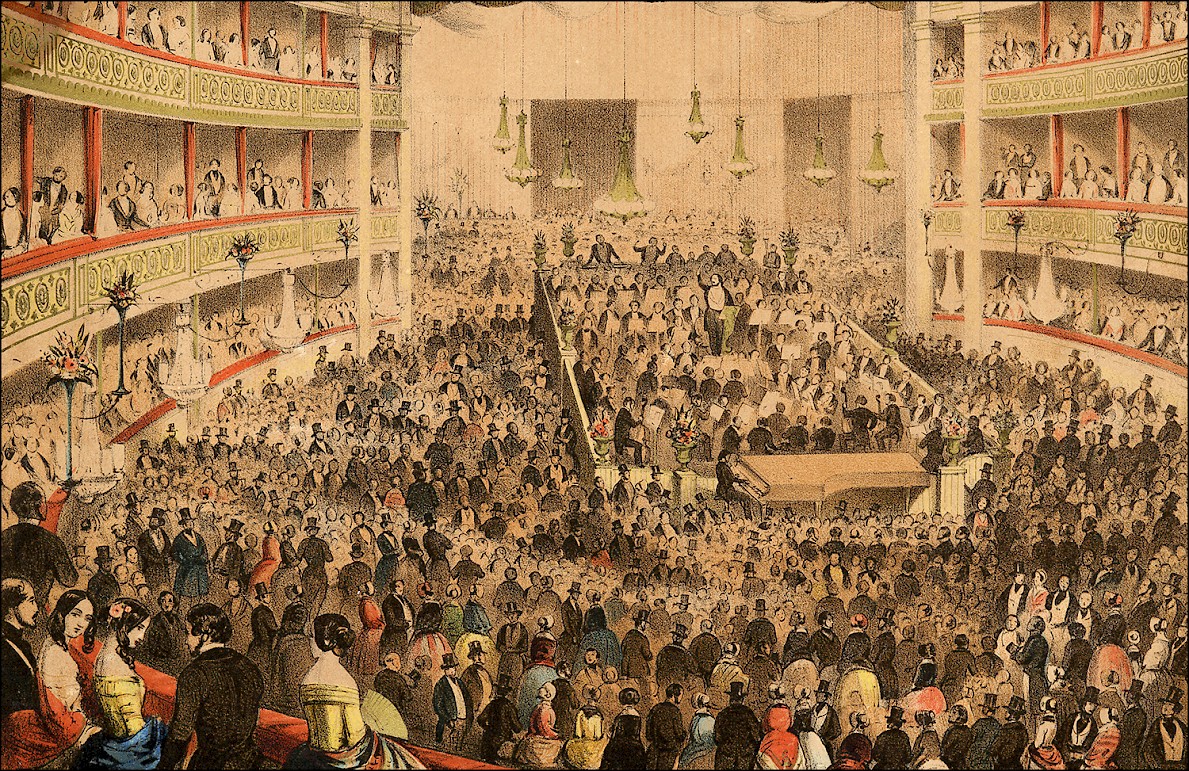
In particular, I explored how French émigrés to London across the long 19th century were able to absorb local traits and introduce new ones, animating British musical practices. Many of the most successful incomers, like Woelfl, were innovators, skilled at navigating change and finding sustainable pathways. They crossed the English Channel for a variety of reasons. My case studies embraced Sébastien Erard and Prosper Sainton, Nicholas-Charles Bochsa and Louis Jullien (conductor of large indoor promenade concerts at Covent Garden Theatre, above), 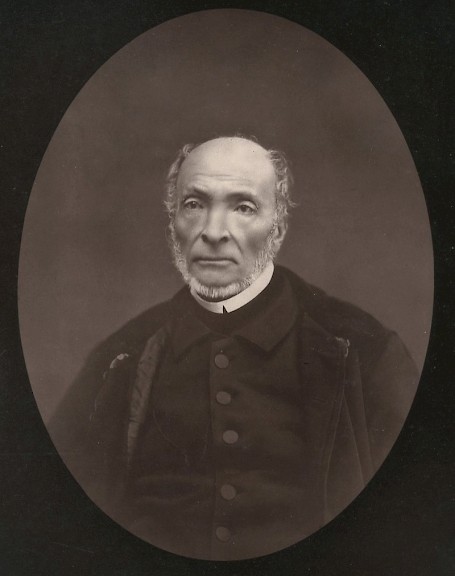 Victor Schoelcher (the republican refugee and pioneering Handel biogapher shown at right), Luigi Cherubini and Hector Berlioz. Switching direction for the conclusion, I looked at French practices adopted by Britons who'd travelled purposefully the other way, to France for inspiration and then back again.
The under-studied influence of French musicians in 19th-century Britain invites more investigation. A greater lesson may be that, through the mixing of elements fostered by geographical mobility, musicians can transcend national identity as a defining (and limited) measure of ability. Music helps all of us expand horizons and override external difference.
'You've given new inspiration for my research into the links between England and France'
a Symposium participant
'A brilliant presentation'
Prof. Margit Haider-Dechant, University of Bonn, President of the International Joseph Woelfl Society